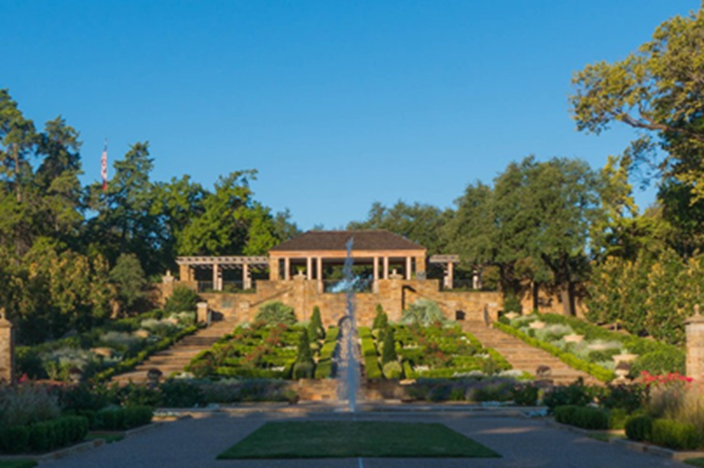
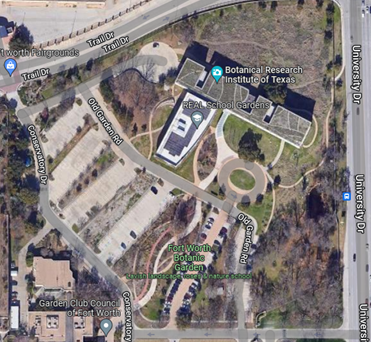
The Fort Worth Botanic Gardens has long been a place where people can explore the 120-acre garden and appreciate nature local to the DFW area. In October of 2020, management of the garden moved from the city of Fort Worth to the Botanical Research Institute of Texas (BRIT). Shortly after the transition, the garden announced that it would begin updating its Master Plan to increase focus on sustainability and resilience over the next 20 years. Its current master plan was approved 11 years ago.
History
The Fort Worth Botanical Garden began in 1934 as a part of Rock Springs Park, featuring a rose garden and other amenities. It sought to host local horticultural events. In 2016, a strategic plan that would involve increasing long-term sustainability through a partnership with BRIT was developed. The plan included researching new ways to increase funding for maintenance of the garden. In 2020, after the strategic plan was passed, BRIT and the Fort Worth Botanical Garden became one entity.
Issues in current plan
The current plan, created by Andropogon Associates, Ltd. of Philadelphia and Gideon Toal Architects of Fort Worth, called for updates that never materialized due to land acquisition issues. While contending with this issue, the garden noticed increased decay to its infrastructure, which impacted the provided and proposed services. The transition to management of the garden by BRIT allows for updates that coincide with the latest research on maintaining biodiversity in the area, while also providing improvements to structures and pathways.
One of the primary themes discussed in public forums from December 2021 and February 2022 was the desire to have opportunities for citizens to focus on plants native to Texas, a factor that was missing from the garden previously. These new opportunities include creating educational forums regarding conservation of Texan plant life. A secondary theme was the need for increased diversity and inclusion in garden sponsored events.
Master Plan
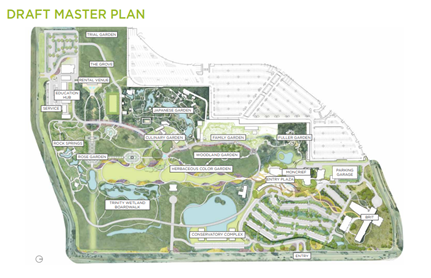
Designed by Studio Outside, a landscape architecture and planning firm, the plan was unveiled for public comment on May 17
th, 2022. To address the aging infrastructure and lack of educational opportunities, the new plan will include updates to the Texas Native Forest Boardwalk, The Fuller Garden, and The Japanese Garden. The plan proposes adding an educational hub, family garden, and culinary garden where participants can learn more about food native to the area and honor local cuisine. The plan would also introduce a conservatory to focus on preservation of the biodiversity of plants native to the region. The master plan would be funded partially by the City of Fort Worth, who already allocated $4.3 million in May 2020 for improvements to parts of the garden, such as the Tinsley Rock Springs Woods and the Rose Garden. The next steps involve plan refinement after receiving public input, followed by cost projecting, phasing strategy, and fundraising.
The priorities of the master plan include:
- “An inclusive, clearly defined and easily shared vision and mission that fully embraces the strengths and assets of both parent institutions
- Sustainable buildings and resilient landscapes that demonstrate both the importance of locally adapted development, and how to achieve it
- Design concepts and site elements that not only celebrate the individual histories and built environments of both institutions, but also bring them together into a unified, cohesive campus.
- A strong foundation for programming that is complementary to the institutional mission and intentionally supports improved guest experience and growth in generated revenue.”