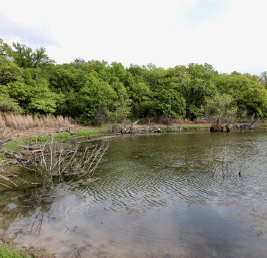
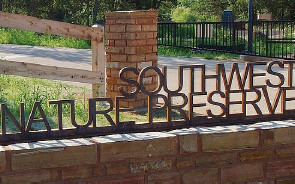
The Southwest Nature Preserve is a prime example of the Eastern Cross Timbers Ecosystem. It is a 58 acre tract of land that is located south of Interstate 20, adjacent to Bowman Springs Drive. Property for the Nature Preserve was acquired by the Trust for Public Land until the City of Arlington was able to purchase it in 2005. The Preserve has three ponds and is home to several significant native plant species.
The Cross Timbers Ecosystem spans from present day Kansas to just north of Waco, Texas. Running along the Brazos river, the region is a boundary between forests of the Southern Great Plains and the Forests of Eastern North America. The timbers are unique because of their diverse fauna and flora, geology and the climate of the region. Bison, prairie dogs and burrowing owls have historically roamed the Timbers. Today, coyotes, bobcats, white tailed deer, and foxes reside in the region.
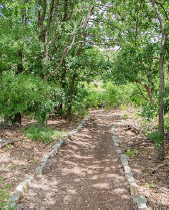
This 58 mile nature preserve is a tract of undeveloped land with trails that lead you around 3 ponds, and to a high bluff that has sandstone outcroppings with dramatic views. A terraced outdoor seating/education area overlooks the west end of the lower pond. There are also picnic tables accessible for day use. It is a great get-away for the citizens of Arlington that is easily accessible for all.
The Southwest Nature Preserve is 58 acres of undeveloped land which is home to many native plants and animals. Bobcats, foxes, white tailed deer, wild turkeys, and coyotes call this preserve home and migratory species, such as birds of prey, waterfowl and other migratory birds pass through this region. Of the 338 species of bird that migrate through North America, 333 of them (98.5%) have been recorded in Texas, making this preserve a crucial piece for migration patterns.
The Cross Timbers is ranked medium in terms of land conservation status among other regions in North Texas. Although the Conservation is ranked medium, the potential for rapid conversion and fragmentation in the future is imminent. Protecting the eco-regions prairies, woodlands, and remaining river corridors should be a priority. The Southwest Nature Preserve is representing an important role in preserving components of our local eroding biodiversity. It also provides an accessible area for research and education purposes. This allows us to get a better understanding of climate change, biodiversity, and ecology of our North Texas region.