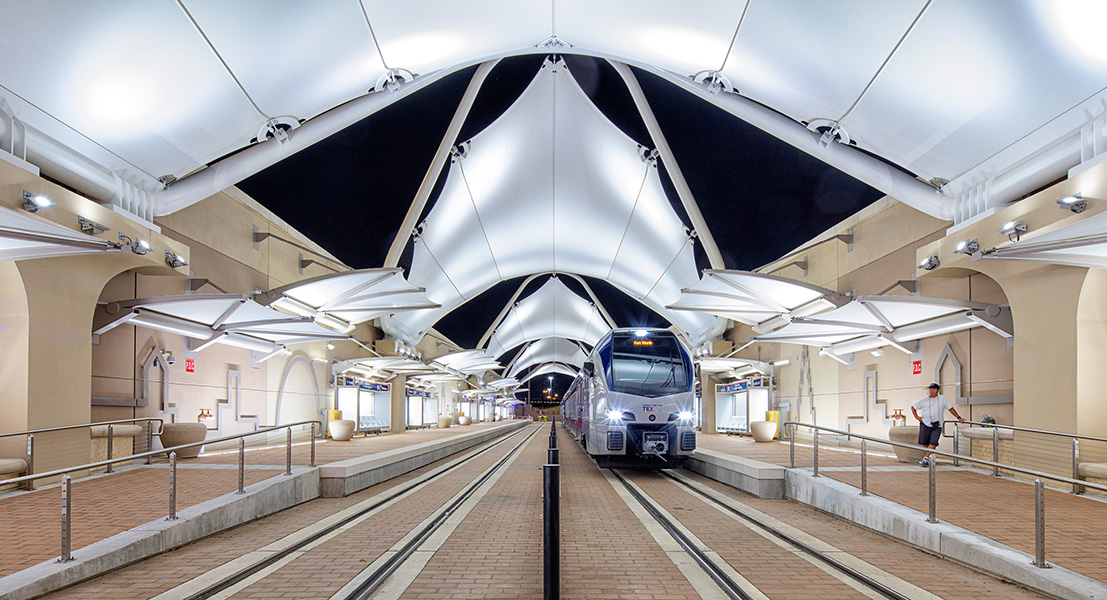
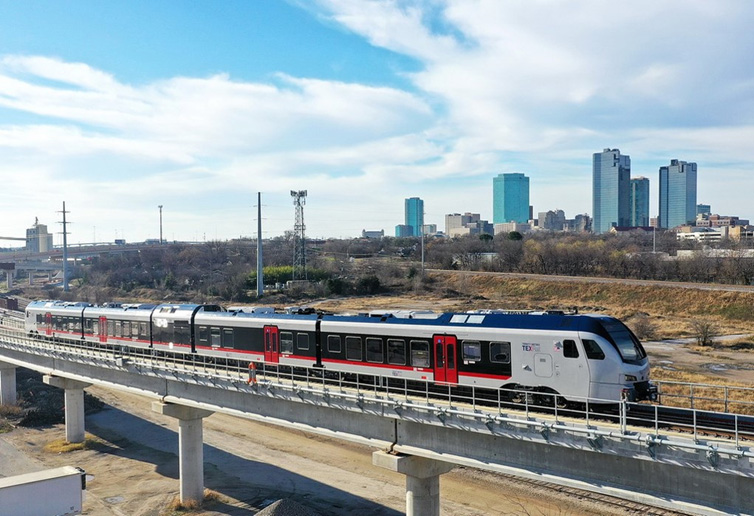
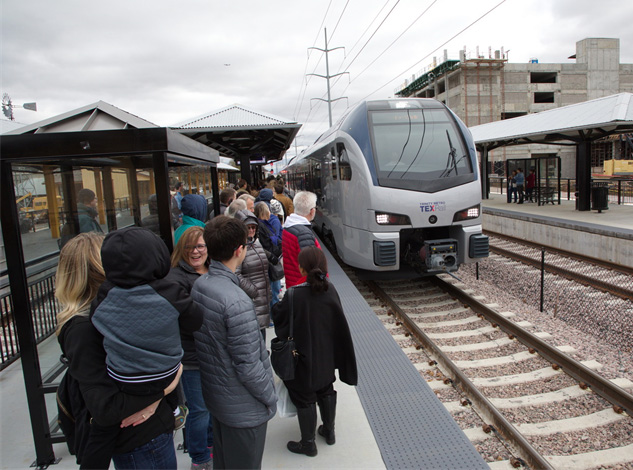
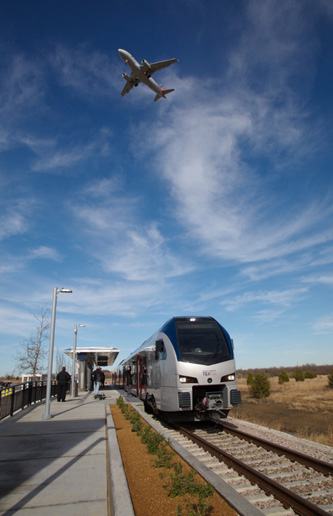
On August 24, 2016, local, state and federal staff and officials from across Tarrant County joined together to break ground for the brand-new rail service connecting Fort Worth, TX to DFW International Airport. The service for the line began on January 10, 2019, and today it is known as TEXRail. This rail line is a critical missing link between Fort Worth’s central business district and DFW Airport. It is the first-ever public transportation option to connect the two directly. The community received the addition to the motor vehicle dominated environment of North Texas well. In the first 12 days, approximately 55,000 passengers used TEXRail services and 545,345 within the first year of its opening. The TEXRail project came at a crucial time, when rising traffic volume and congestion in the DFW metroplex are under discussion due to major environmental concerns, such as air pollution, greenhouse gas emissions, climate change and destruction of open spaces. The TEXRail project demonstrates that by adding rail service to the existing transportation system in North Texas does not require a reduction in the number of private automobiles. Instead, providing more well-planned mobility options such as TEXRail can have a huge positive impact on sustainability related problems and transportation needs in this region.
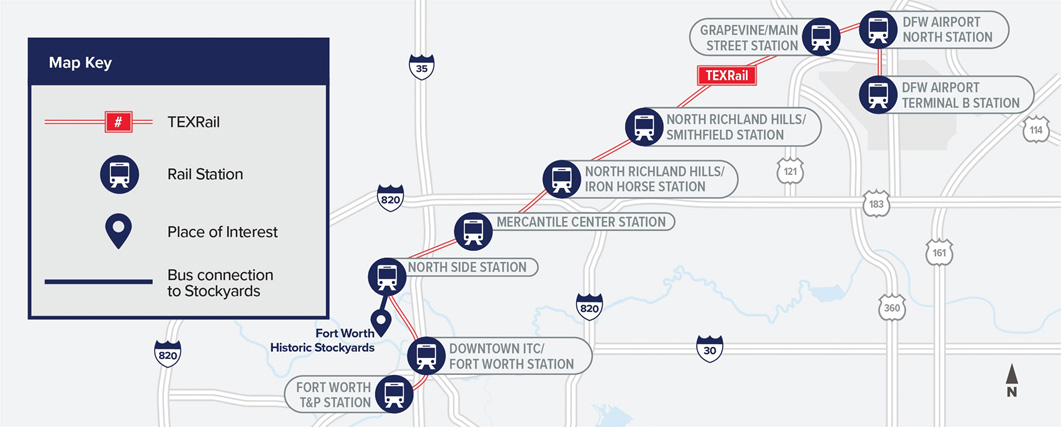
TEXRail is a 27-mile long commuter rail line that extends from downtown Fort Worth through North Fort Worth, North Richland Hills, and Grapevine, to the northern entrance of Dallas/Fort Worth International Airport, ending at Terminal B. Although the line does not extend outside of Tarrant County, it provides connections to other transportation services in the area, including the Dallas Area Rapid Transit (DART) light rail system, Amtrak, Trinity Railway Express (TRE), and the bus system. The train runs hourly and operates 365 days a year. Its speed ranges between 0 and 70 mph, and the entire route takes 52 minutes. A fare discount is available for people 65 and older, people with disabilities, and youth ages 5 through 19.
Currently, there are nine stations whereby commuters can access TEXRail; however, in most cases, getting to either of these nine stations requires commuters to travel by car. The need to travel by car brings up the question of parking. For commuters and day-trippers, Trinity Metro allows up to 20-hours of free parking at all stations except Downtown ITC (Fort Worth) and DFW Terminal B (Grapevine). For travelers who plan to be out of town for two or more days, the options are either get a ride to a station or use a bus route wherever possible.
Beyond Mobility
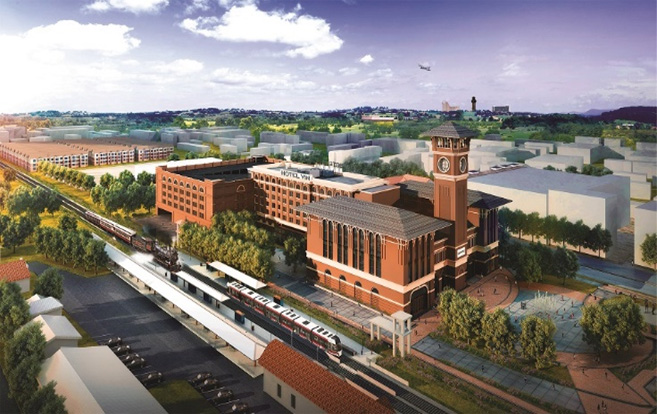
Public transit is a critical part of a regional growth strategy. Before the TEXRail line became operational, higher density development had already begun around several of its planned stations. Near the T&P station in Fort Worth, Katy Station Lofts, a mixed-use, mixed-income, multi-family development proposal was approved by the City of Fort Worth in the summer of 2018. The development includes mixed-use residential and commercial towers and a parking garage. When finished, this transit-oriented development will provide affordable housing with walkable access to transit and jobs. The City of North Richland Hills also saw an opportunity in the TEXRail line. To take advantage of this opportunity and promote mixed-use, transit-oriented development, it established transit-oriented development districts around both of its TEXRail stations. In Grapevine, a $105 million mixed-use development is perhaps the most ambitious development around the TEXRail stations. Planned to open in the Summer of 2020, the development will feature a 38, 000 square foot outdoor plaza, five-story rail station, a hotel, and parking. This nineteenth-century design rail station will have a market, entertainment and food halls, meeting and community event spaces, and offices.
Future of TexRail
As the population in the DFW metroplex continues to increase in the coming years, the region will likely face unprecedented transportation demands. Adequate infrastructure that supports all modes of travel is an integral part of long-term urban sustainability. Recent shifts in the regions’ demographics and lifestyles demonstrate that residents of all ages increasingly want to live in walkable, mixed-use, and transit-rich communities. As the population in DFW metroplex continues to increase in the coming years, the residents of this region will want to have more mobility options. Additionally, mobility and transportation are of key importance to climate change and global warming. Personal vehicles are major producers of air pollutants and greenhouse gas emissions. Through the development and use of public transportation, studies show that a significant reduction in greenhouse gas emissions and air pollution is achievable. The DFW region is behind other major metro areas in addressing public transit as an important mode of transportation. TEXRail commuter rail line offers a much-needed alternative to sitting in traffic, has environmental, social, and economic benefits, and shows that there can be more to transportation in DFW than asphalt and concrete.
The TexRail stations are:
Sources:
https://ridetrinitymetro.org/
https://www.grapevinetexasusa.com/plan/transportation/texrail/
https://www.keranews.org/post/texrail-finally-here-heres-how-it-works
https://www.nrhtx.com/956/TEXRail
https://fortworthtexas.gov/projects/texrail/